A PERSON / A PLACE / A TABLE
Someone who carries
the changing sea to the table.
The species of fish change with the seasons. Fishermen catch them; they are selected at the port; and many hands are involved before they reach the table.
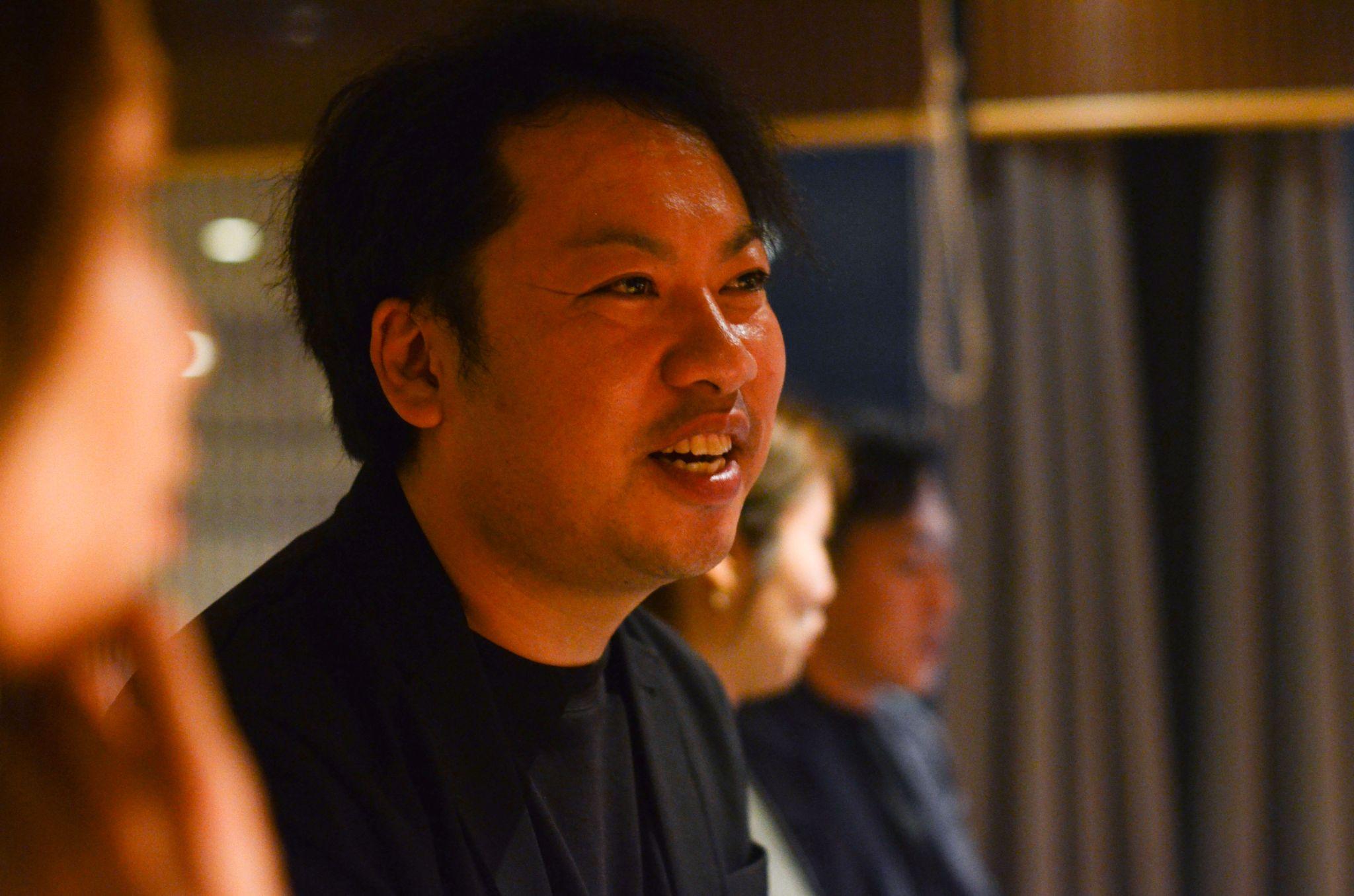
This is a record of an evening in Kagurazaka on October 14, 2026, with Daiki Kambayashi, a fish wholesaler from Maizuru.
PEOPLE / Discover Daiki Kambayashi's work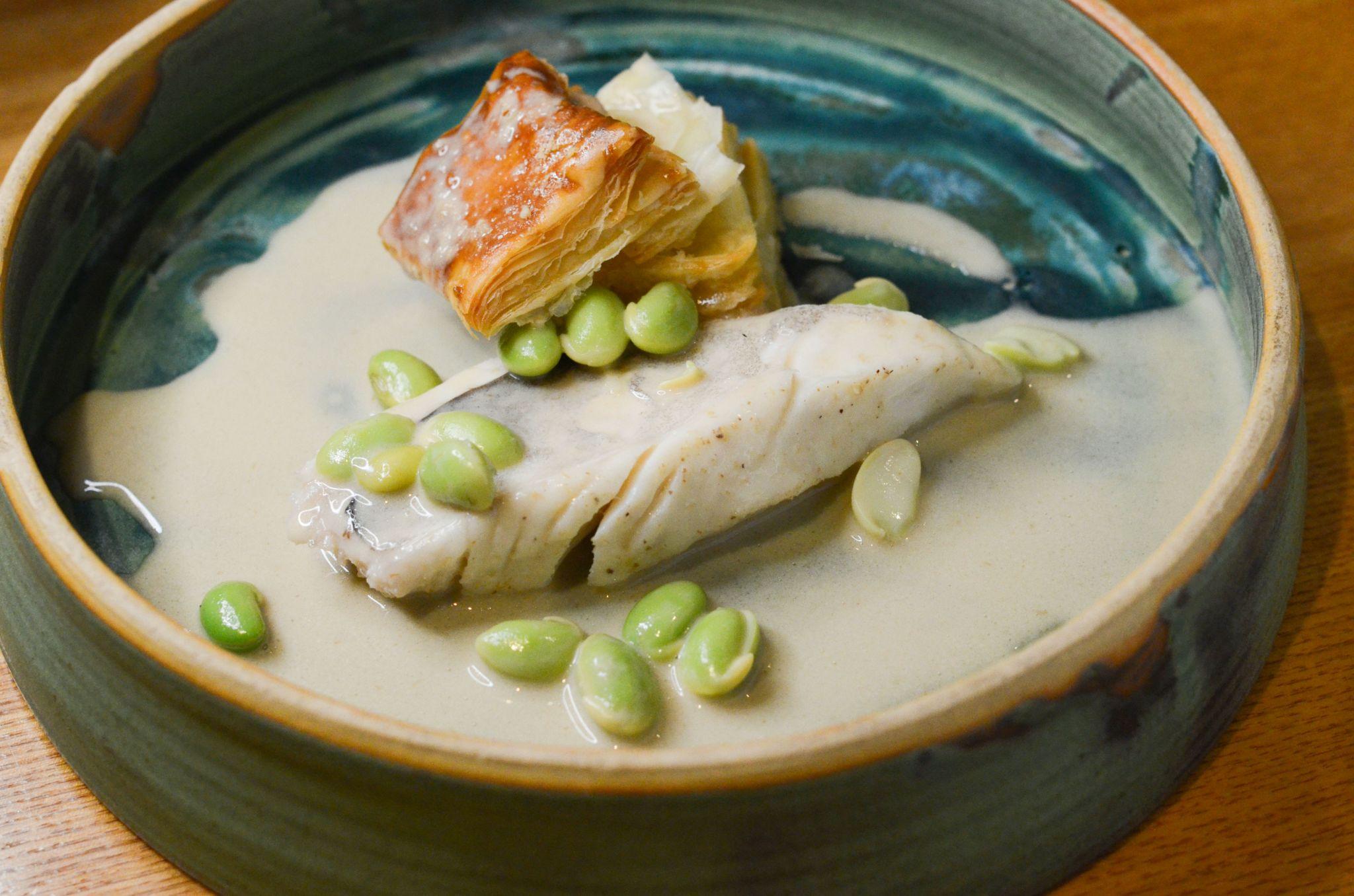
SHIZEN WO SHOKUSU is a one-day dining gathering where producers, chefs and guests share a table. By learning about a place, meeting its producers and eating its food, we make room for what might come next.
The founder of this project, which asks fundamental questions about the meaning and future of food, is Taku Aoyama, owner-chef of the Italian restaurant Grasara Kagurazaka in Tokyo. Rather than pursuing only the economic success of a restaurant, Aoyama began the initiative to rethink the relationship between food and production and to nurture a new culture through restaurants.
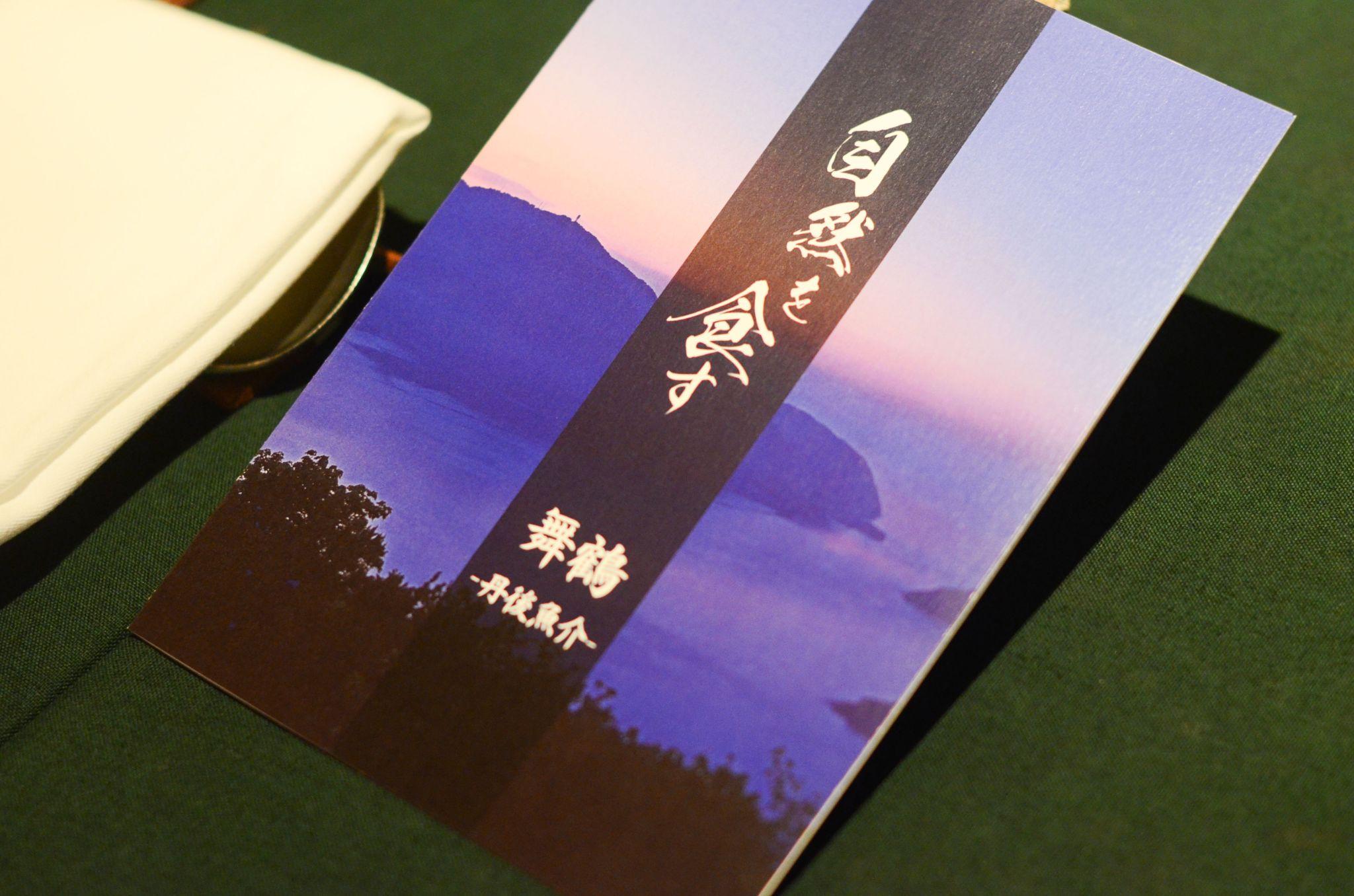
The theme of the SHIZEN WO SHOKUSU dinner held in Kagurazaka, Tokyo, on October 14, 2026, was Maizuru. Located in northern Kyoto Prefecture, Maizuru Fishing Port faces the abundant waters of Wakasa Bay. Its sheltered bay and the intricate ria coastline of inner Wakasa Bay have helped make the port a major seafood distribution hub within the prefecture.
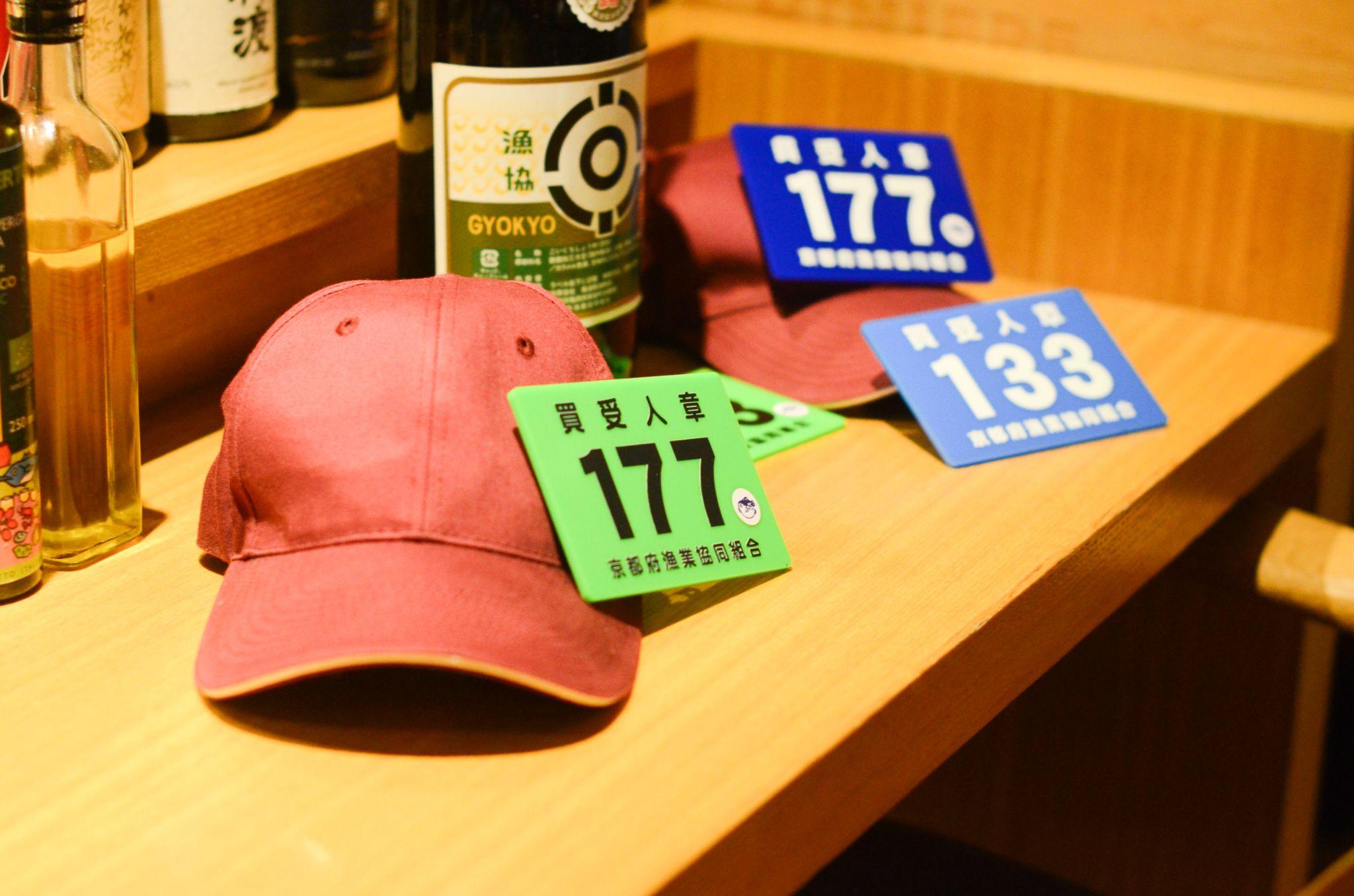
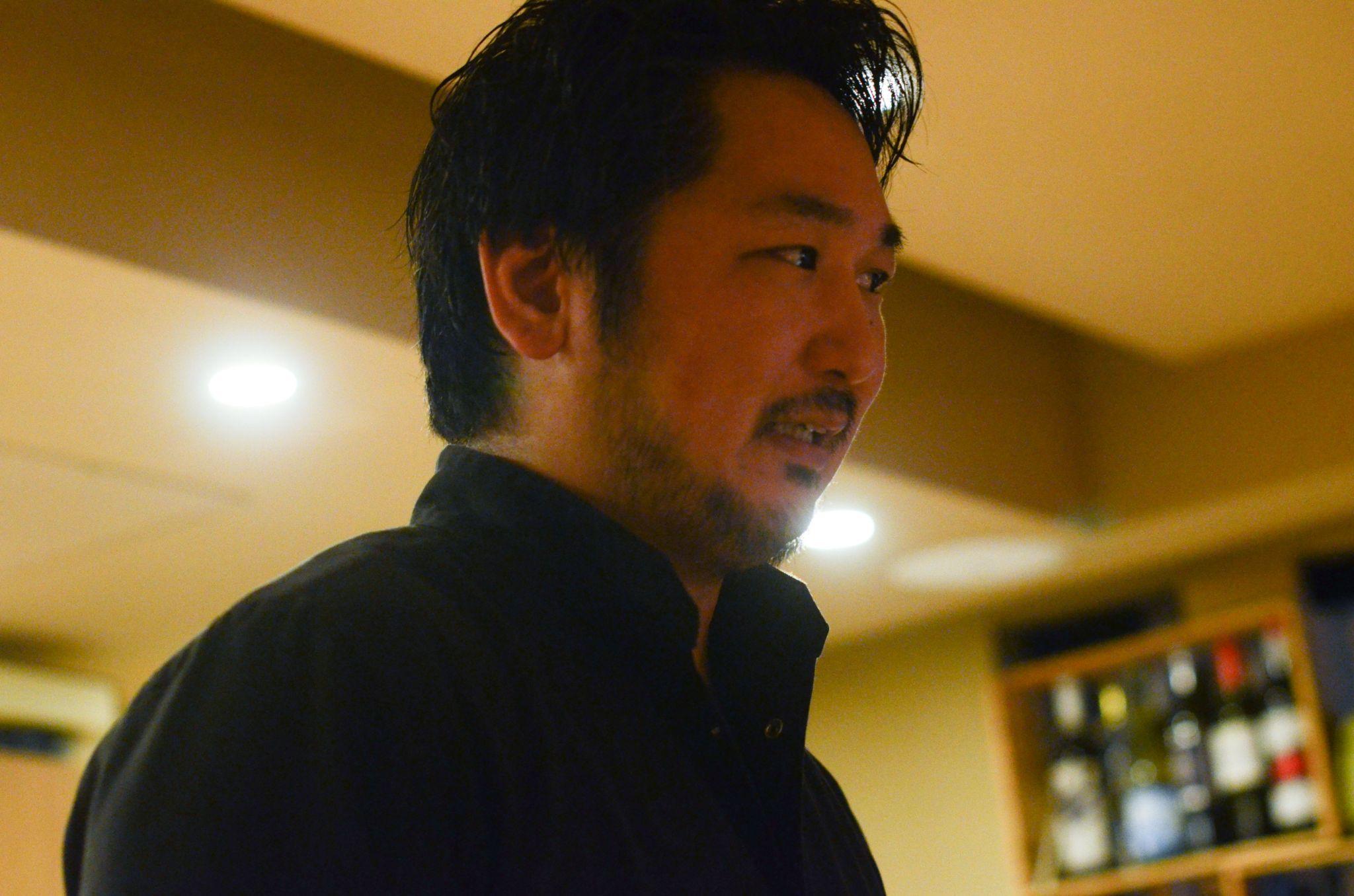
The guest from the production area was Daiki Kambayashi, a fish wholesaler and president of Maizuru Shokuseikatsu in Maizuru, Kyoto Prefecture.
The special course began with seafood from Wakasa Bay selected and supplied by Kambayashi.
A six-course menu with Maizuru seafood at its heart
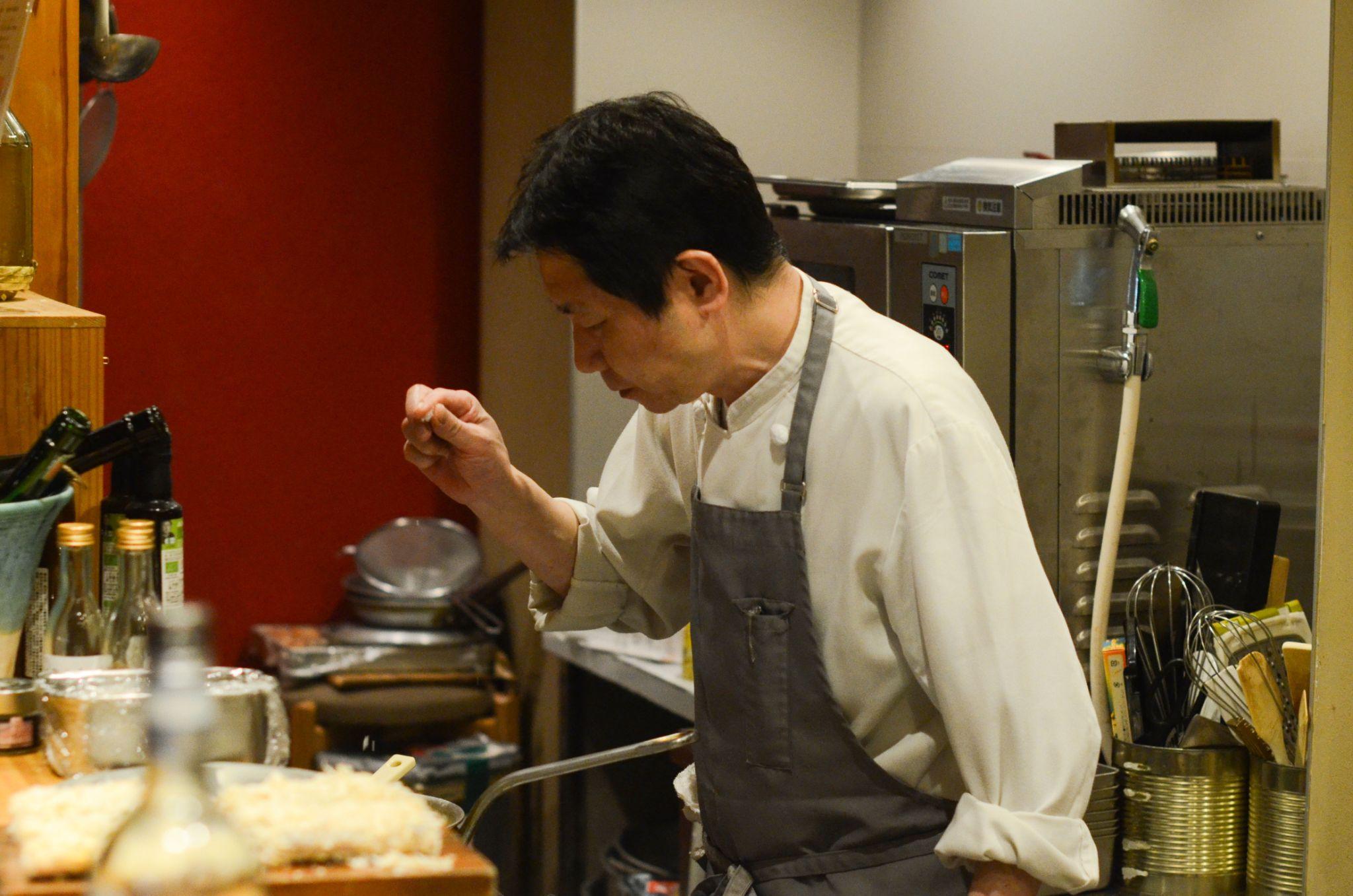
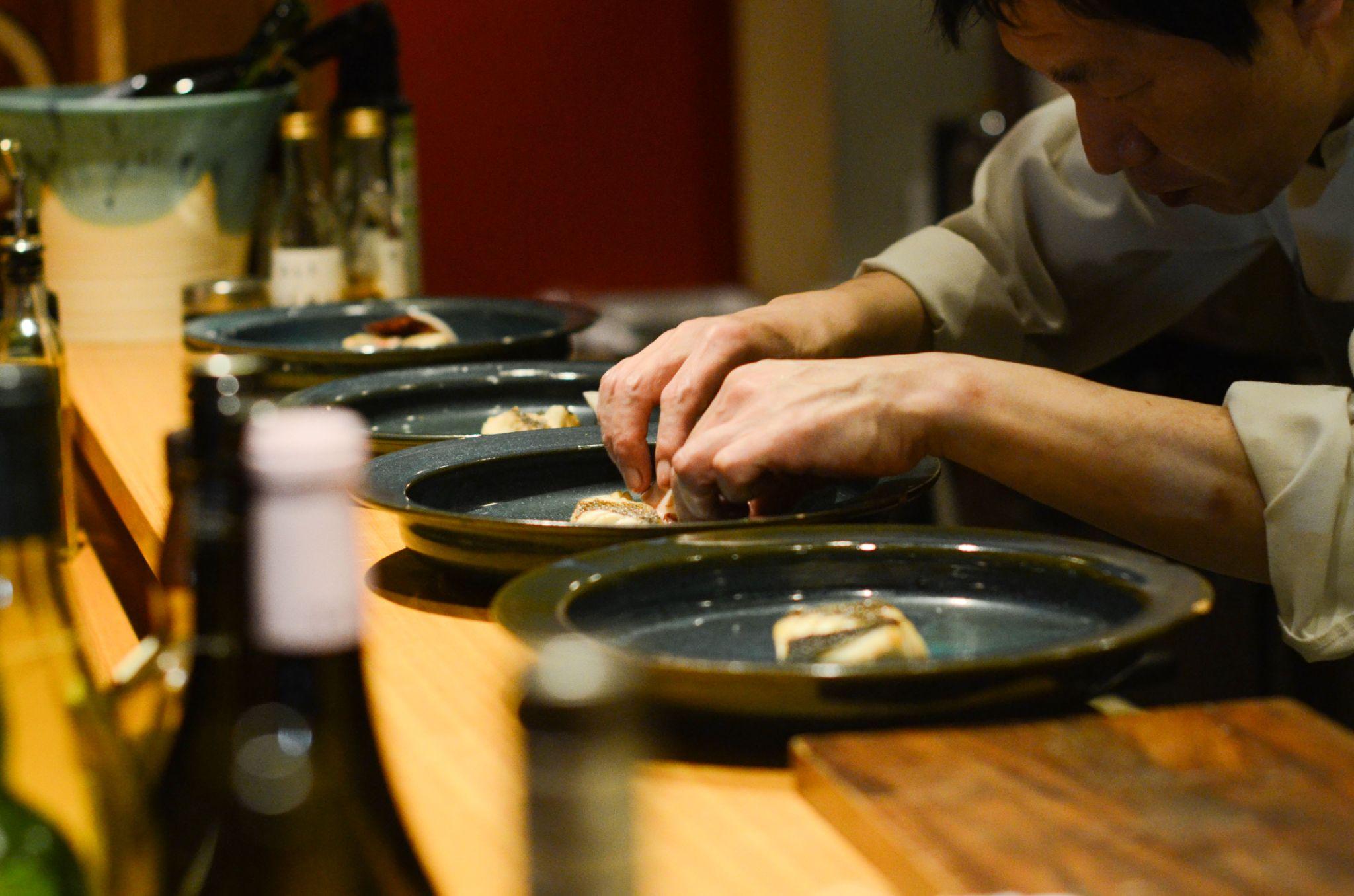
Leading the kitchen was Keisuke Sugimoto of Paprika, a bistro in Kagurazaka. Having trained in hotels and restaurants, Sugimoto captivates guests with cooking unbound by genre. His dishes were joined by ideas from Kouzou Imai, a chef preparing to open a new restaurant in Nishi-Azabu. Together they offered an ambitious range of approaches to fish.
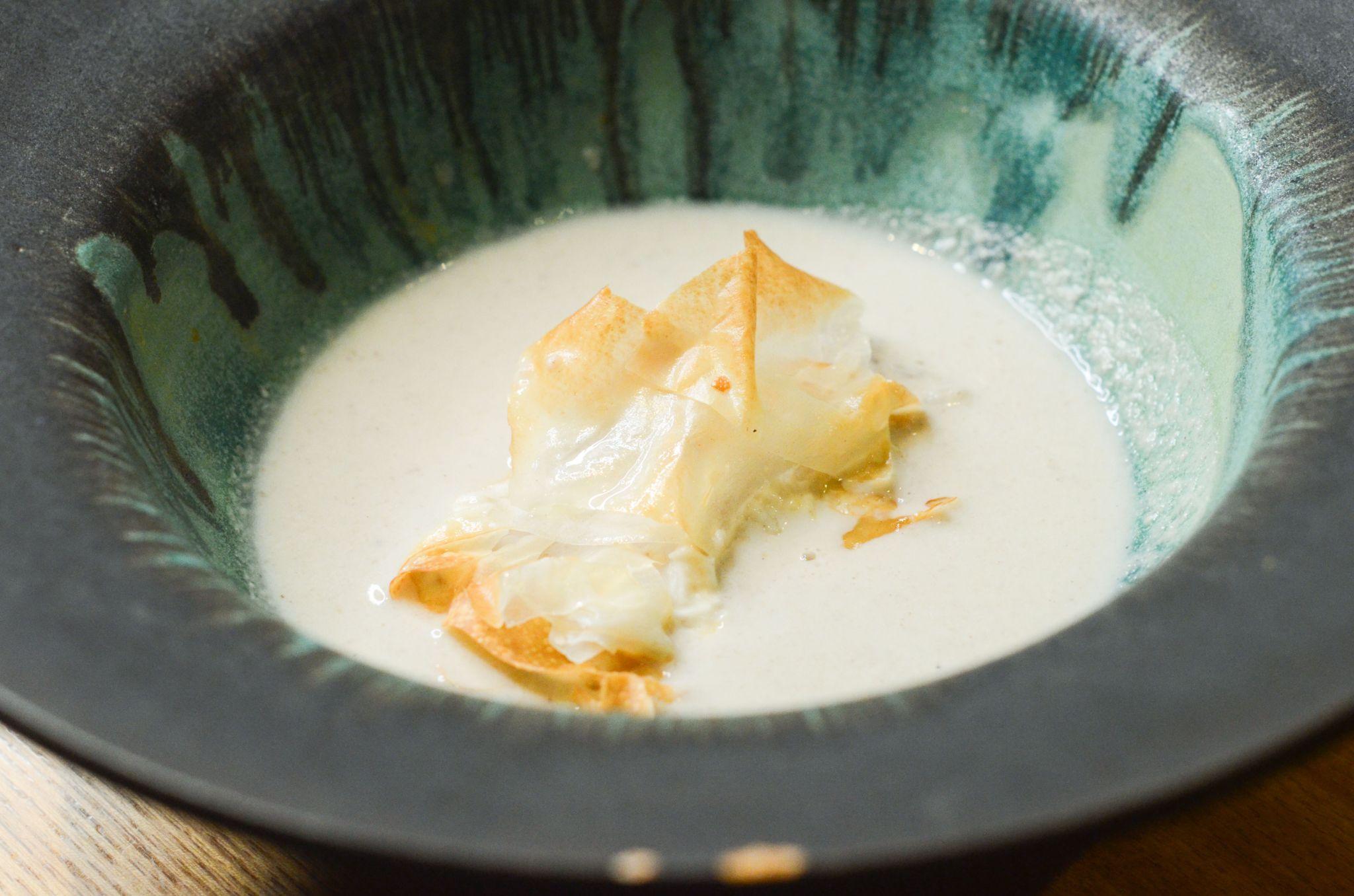
Tilefish wrapped in filo pastry / White mushrooms
The first three dishes followed recipes by Chef Imai. For the opening course, he chose tilefish.
Known as guji in Kyoto and Osaka kappo restaurants, tilefish is a prized fish. Despite having “tai” (sea bream) in its Japanese name, it belongs to the tilefish family rather than the sea bream family.
The standard preparation is Wakasa-yaki, in which the scales are cooked until crisp. Imai chose another direction: he carefully removed the scales and skin to work with the clean flesh alone.
He wrapped the flesh in paper-thin filo pastry and baked it. Butter or other dairy fat, usually brushed on filo, would mask the fish's delicate aroma, so he instead used sesame oil with a restrained roasted fragrance.
The sauce began with a soup made by chopping and blending the tilefish heads and bones. Sautéed white mushrooms were added and blended smooth, bringing a richness reminiscent of potage. No soy sauce or stock was used for seasoning—only salt. The carefully composed dish allowed the subtle flavor of tilefish to shine against the pleasant crispness of filo pastry.
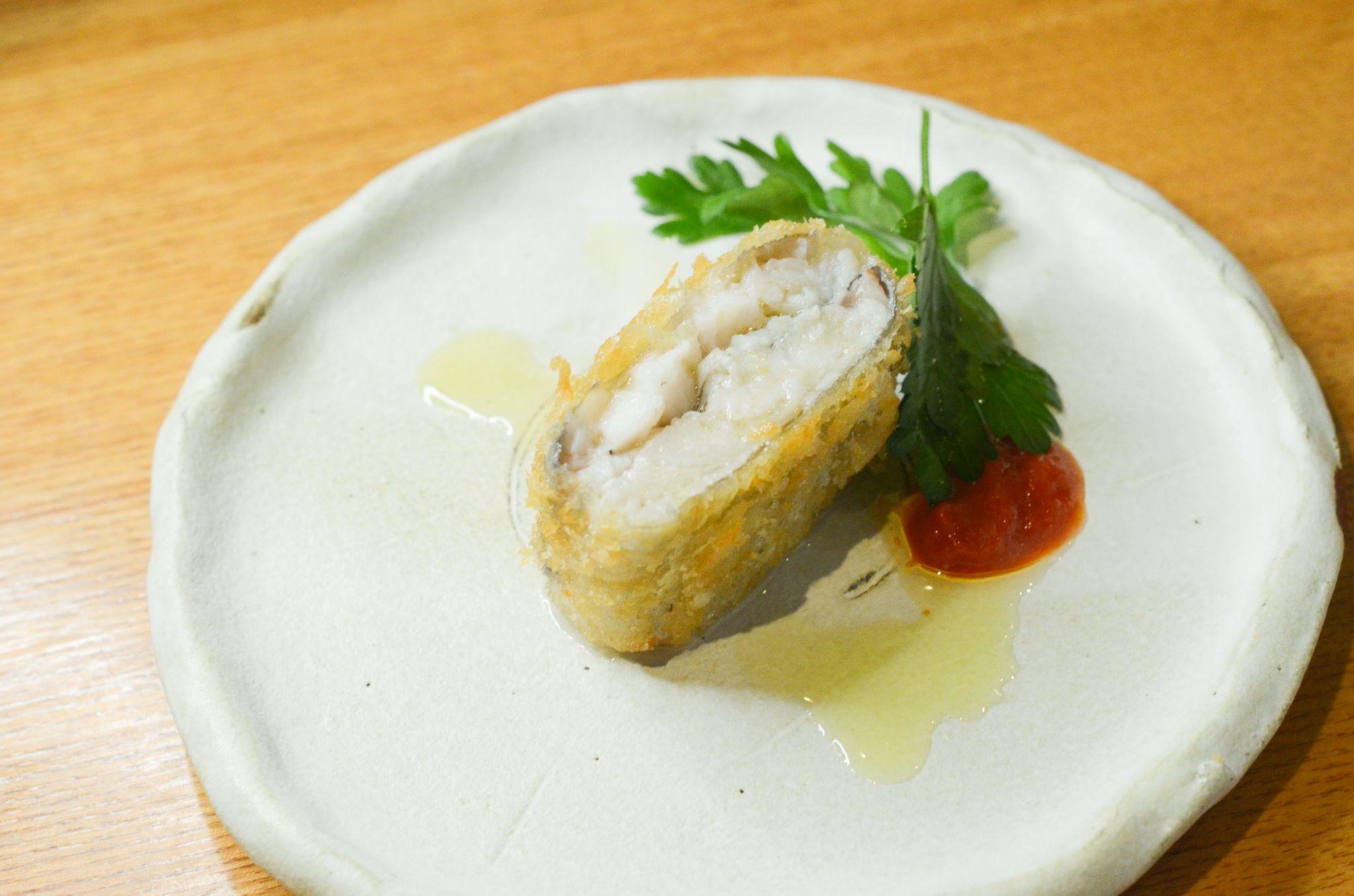
Breaded cutlassfish wrapped in rice paper
Cutlassfish from Wakasa Bay tend to be thick-bodied and rich with fat. Yet once filleted, the flesh is necessarily thin and can easily dry out when cooked. Imai solved this by overlapping the fillets in alternating directions, tightly wrapping them in rice paper, coating them with breadcrumbs and frying them.
The rice-paper wrapper trapped the fish's moisture during cooking, effectively steaming the flesh inside. Its delicate, fluffy texture remained intact, offering a vivid contrast with the crisp coating. The dish revealed a new side of cutlassfish.
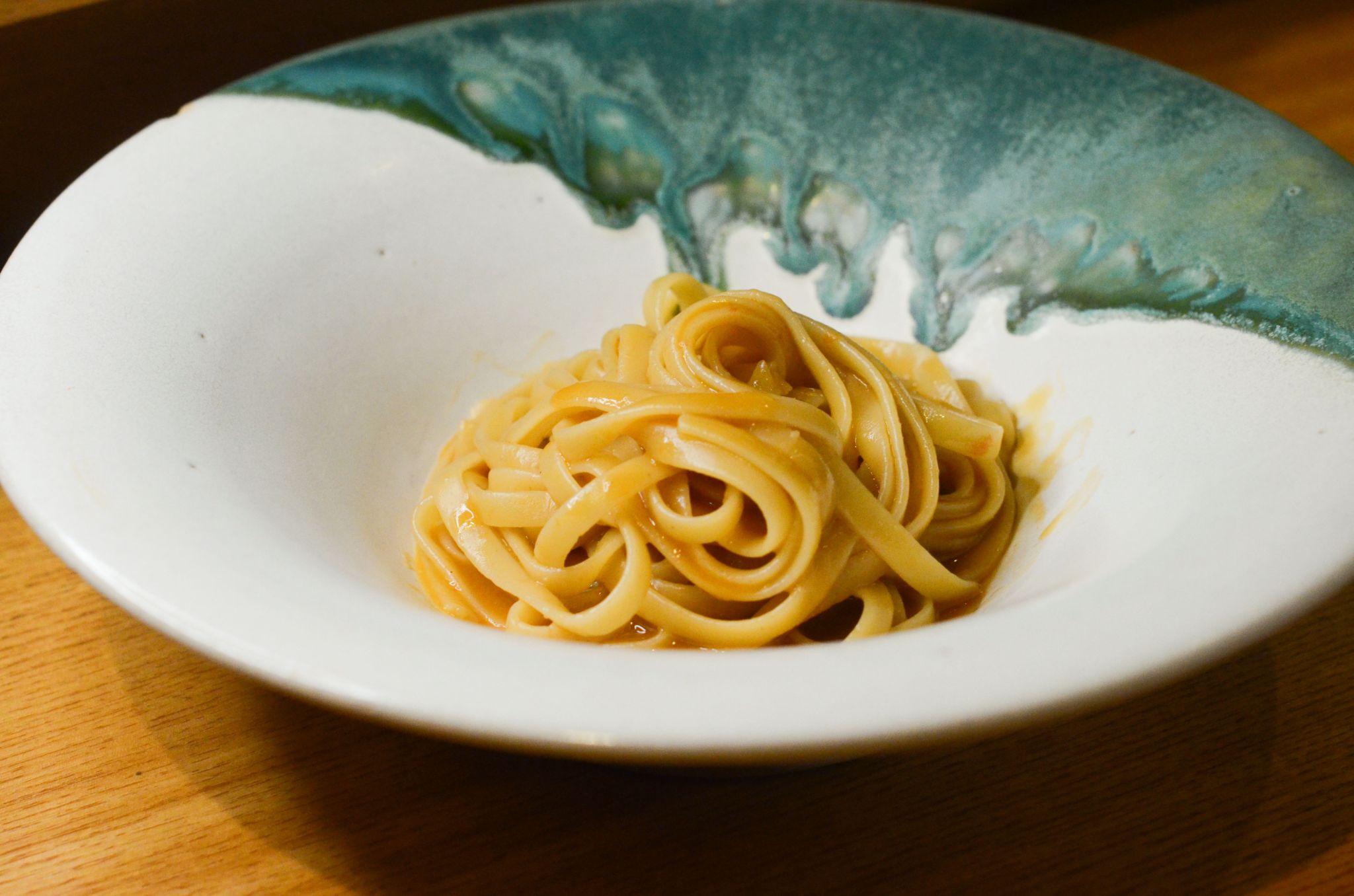
Rich gasu-ebi shrimp and tomato pasta
Gasu-ebi shrimp, caught widely along the Sea of Japan coast including Wakasa Bay, have a rather dull appearance. One explanation for their name is that they were once dismissed as near-worthless “kasu” when landed, although accounts differ.
Yet their sweetness and umami can be richer than those of sweet shrimp. In recent years, this deep-sea species has attracted attention as something of a rare treasure.
Imai presented what he called “pasta made for eating shrimp,” putting the rare ingredient squarely at the center.
Shrimp dishes are often built up with brandy, onions and other aromatics. Here, the only ingredients were gasu-ebi shrimp and fresh tomatoes. The uncluttered presentation—nothing on the plate but pasta—made the idea unmistakable.
The shrimp shells were first sautéed to release their fragrance. The flesh was then added, broken down and cooked in its own moisture to form a light ragù. Chopped fresh tomatoes were added, and the sauce continued to cook in the liquid released by the tomatoes alone.
Thick, flat linguine was coated in this shrimp sauce, made without adding water or even salt. A single bite released the intense flavor of the shrimp itself, calling to mind the aroma of Maizuru Port.
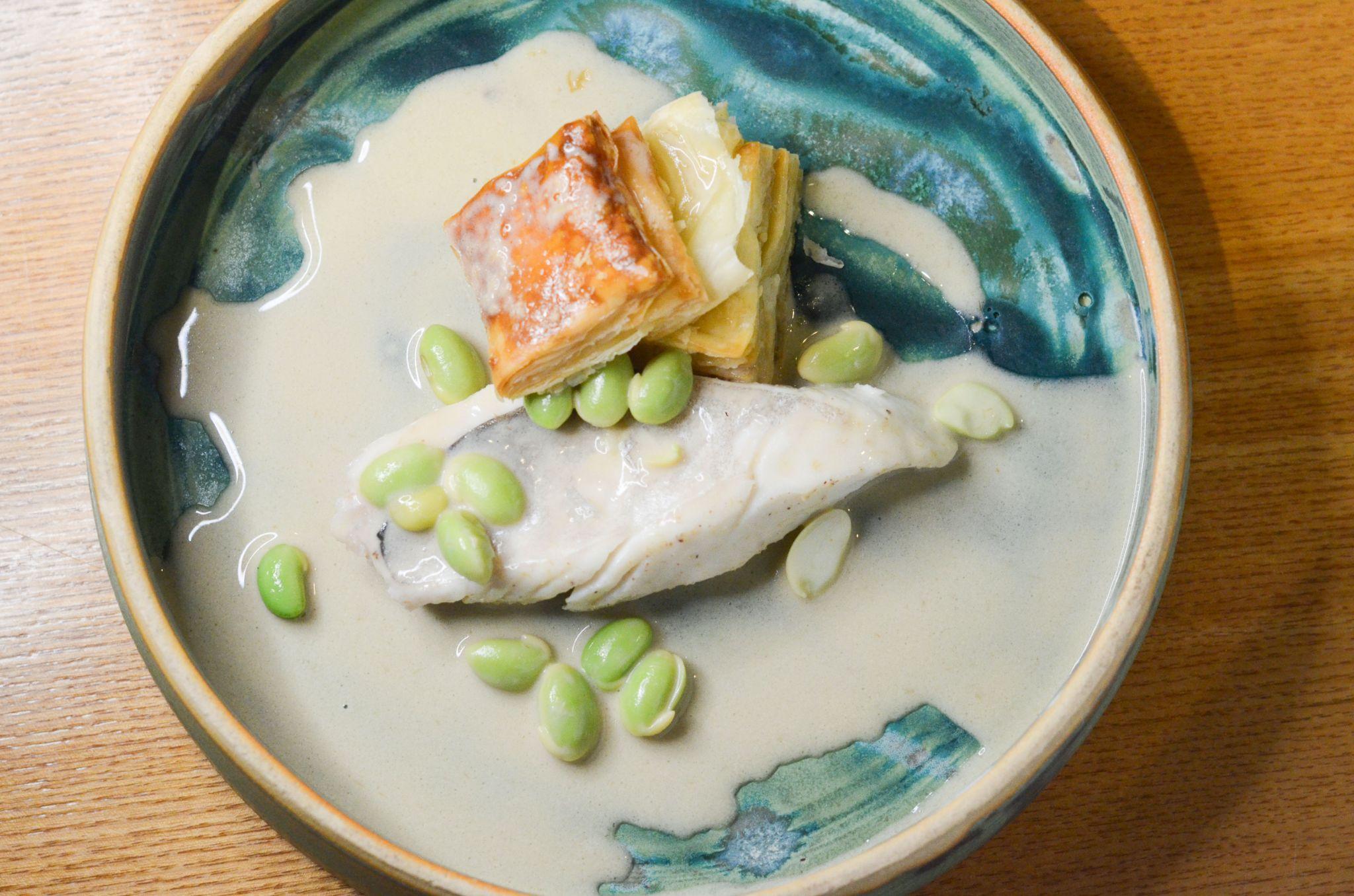
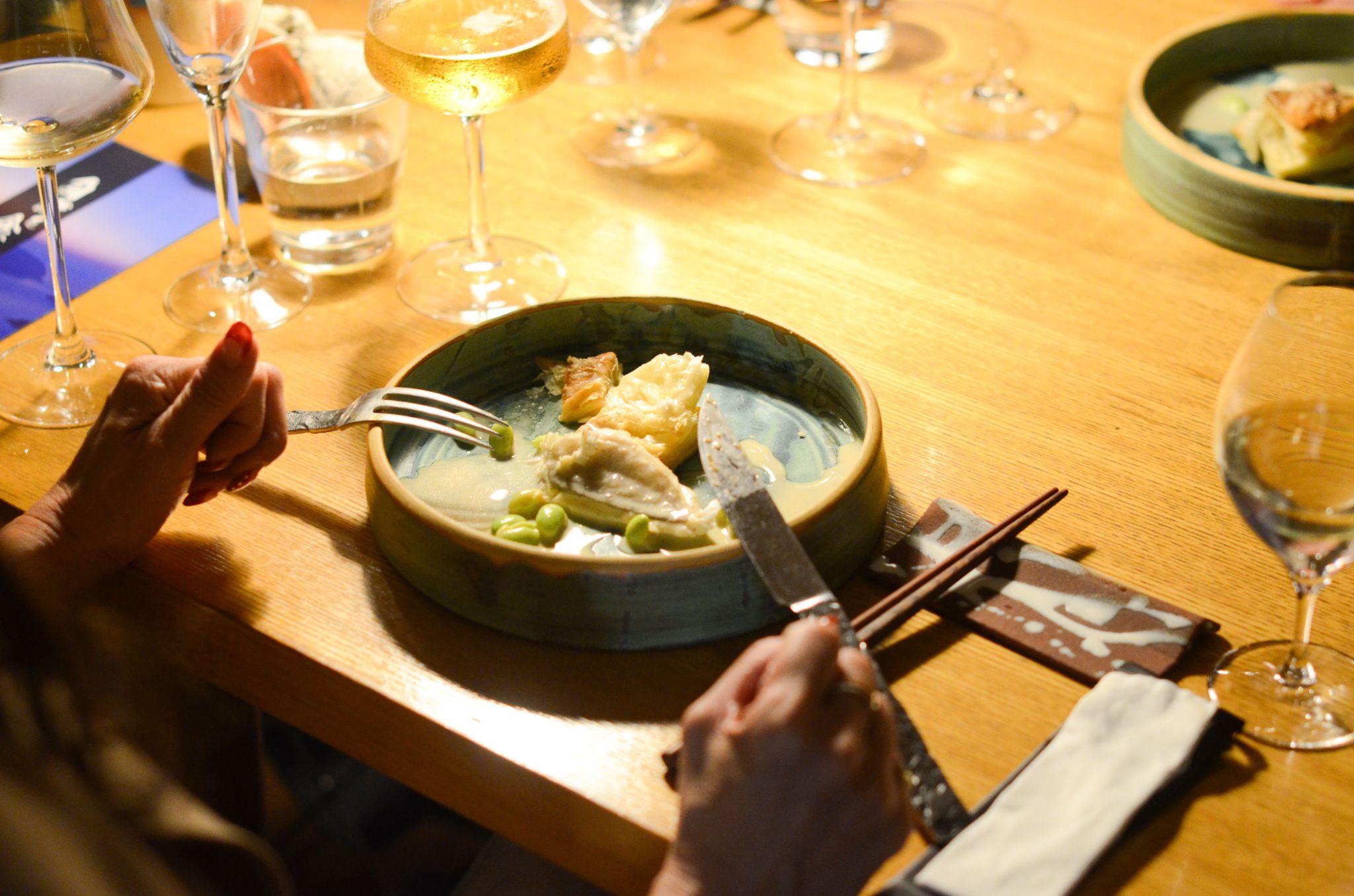
Sautéed unicorn leatherjacket, vin blanc-style / Tango black soybeans and a small pastry
Sugimoto devised the two main dishes. The first featured usubahagi, a large member of the filefish family known locally around Maizuru as uma or umazura. An autumn fish, it is valued for its rich liver and refined white flesh.
Its flesh remains plump and does not tighten excessively when cooked, so he sautéed it simply. The sauce drew on the traditional French sauce vin blanc, made by reducing white wine, cream and butter, with added mushrooms and porcini for deeper umami.
Tango black soybeans brought the terroir of the land into a classical French dish that already expressed Maizuru's sea. In place of bread to mop up the sauce, a fragrant baked pastry provided a crisp counterpoint to its creamy texture.
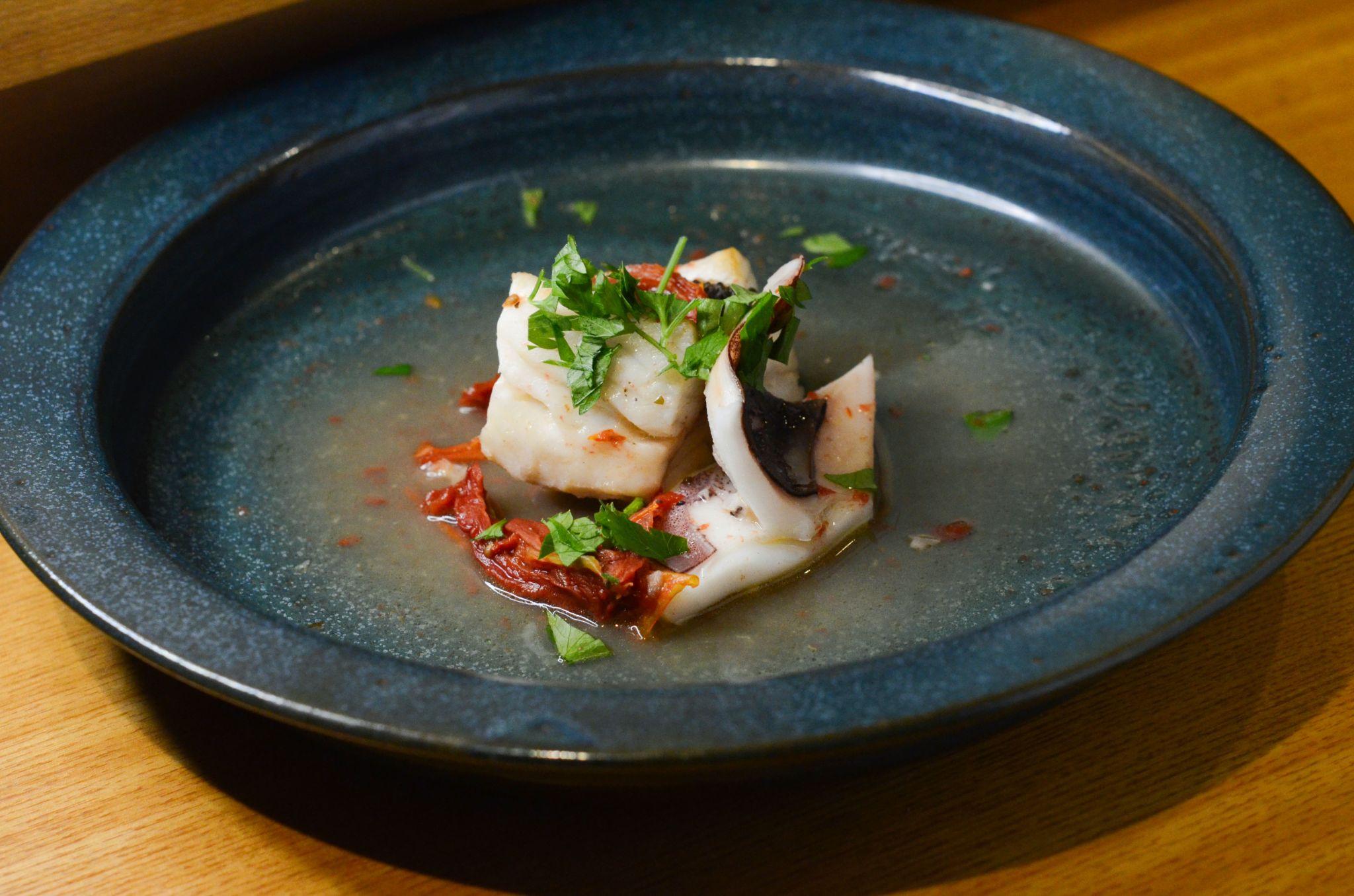
Acqua pazza of sea bass and bigfin reef squid
Of all the seafood brought from Maizuru, sea bass particularly struck Sugimoto with its vitality. To make the most of its strength, he seared the skin until deeply fragrant before finishing it as acqua pazza.
Fresh bigfin reef squid landed in Maizuru was paired with a broth made from clams. The squid was carefully cooked at controlled temperatures, being removed from the heat along the way to avoid overcooking. The savory depth of the sea bass and the soft sweetness of squid came together in a dish that felt like a journey beneath the waters of Maizuru.
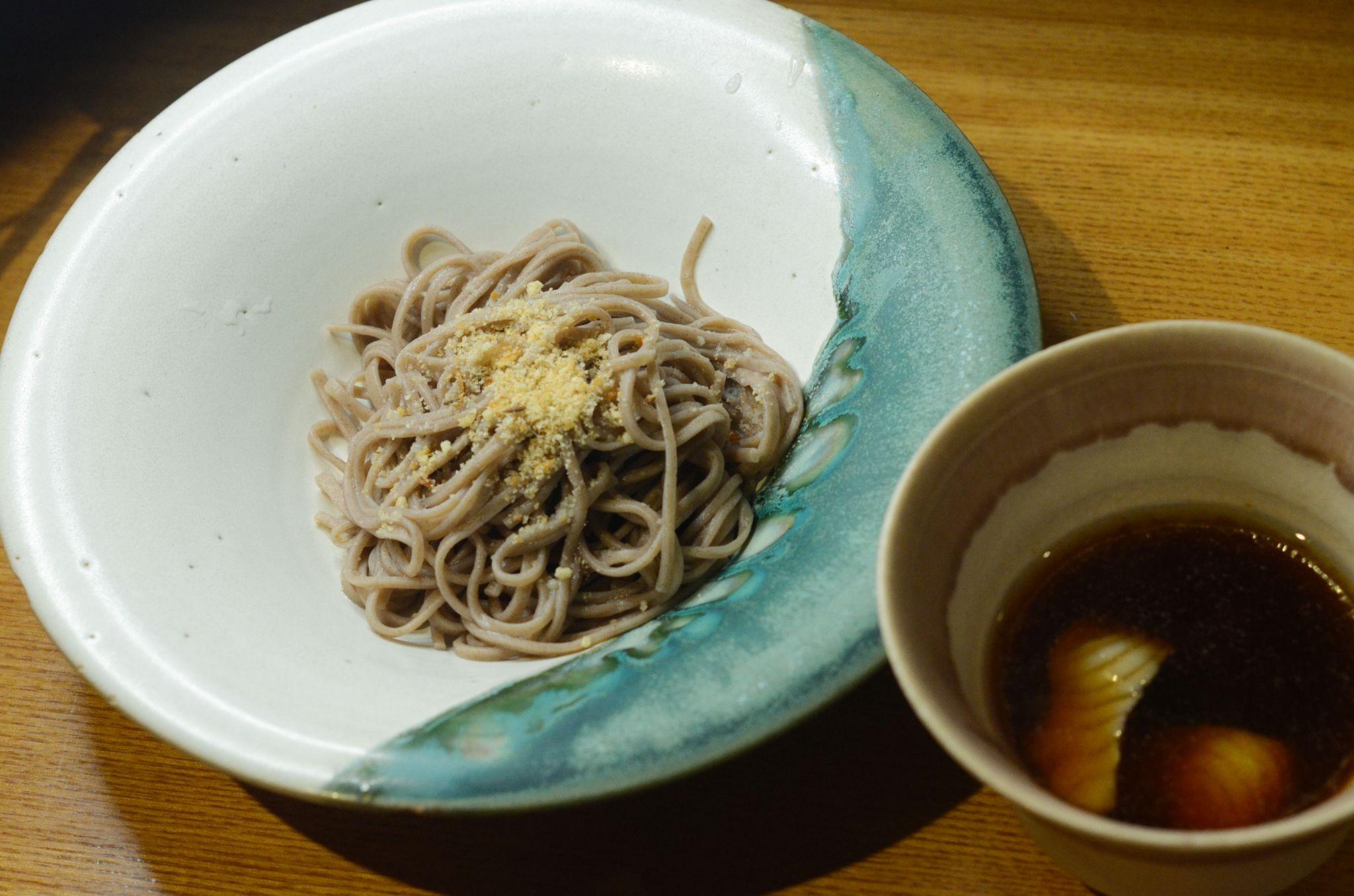
Itasoba tasting Maizuru / Fragrant herbed breadcrumbs
The last savory course was Itasoba, a specialty of SHIZEN WO SHOKUSU. Each gathering features a distinct Western-inspired dipping broth created around its theme.
This time, the seafood broth was made with trimmings and fish bones from earlier courses. The idea of using each ingredient to the very end embodied the philosophy of SHIZEN WO SHOKUSU.
Pieces of sea bass floated in the dipping broth, lifted by a peperoncino oil scented with garlic and chili. Herbed breadcrumbs scattered over the soba added fragrance, savory depth and a gentle heat that intensified the seafood's umami. It was a deeply satisfying dish.
The ever-changing catch is the sea's greatest attraction
What Kambayashi most hoped to do at this gathering was convey directly to city diners “the story beyond the fish.” In urban restaurants and fish shops, seafood often arrives already transformed—an elegant plated dish or a neat fillet.
Its story—what waters it came from, how it was caught (with set nets or longlines at Maizuru Port), how it was handled at the harbor and how it traveled to the city—can disappear from view once it reaches the place of consumption.
“When you work with fish locally, the species before you change from season to season. That change itself is part of what makes fish so fascinating. I was deeply grateful for the chance to communicate this directly in my own words,” Kambayashi explained, describing the value of SHIZEN WO SHOKUSU from the perspective of someone who lives close to the sea.
“The pleasure of a dish doesn't end on the plate. Behind it are the sea, the fishermen, the handling of the catch at port and everyone involved in distribution. That's why I want people to learn this background while eating—and perhaps one day visit our local market or fishing grounds. If even one more person shares what they learn at the source, I believe it will help sustain the region's food culture and bring new life to the community.”
The daily work of bringing fish to the table encompasses everything from handling the catch to preserve freshness to balancing the cost and value of long-distance transport. Kambayashi came to the gathering with a clear sense of the possibilities in connecting the place of production with the dining table.
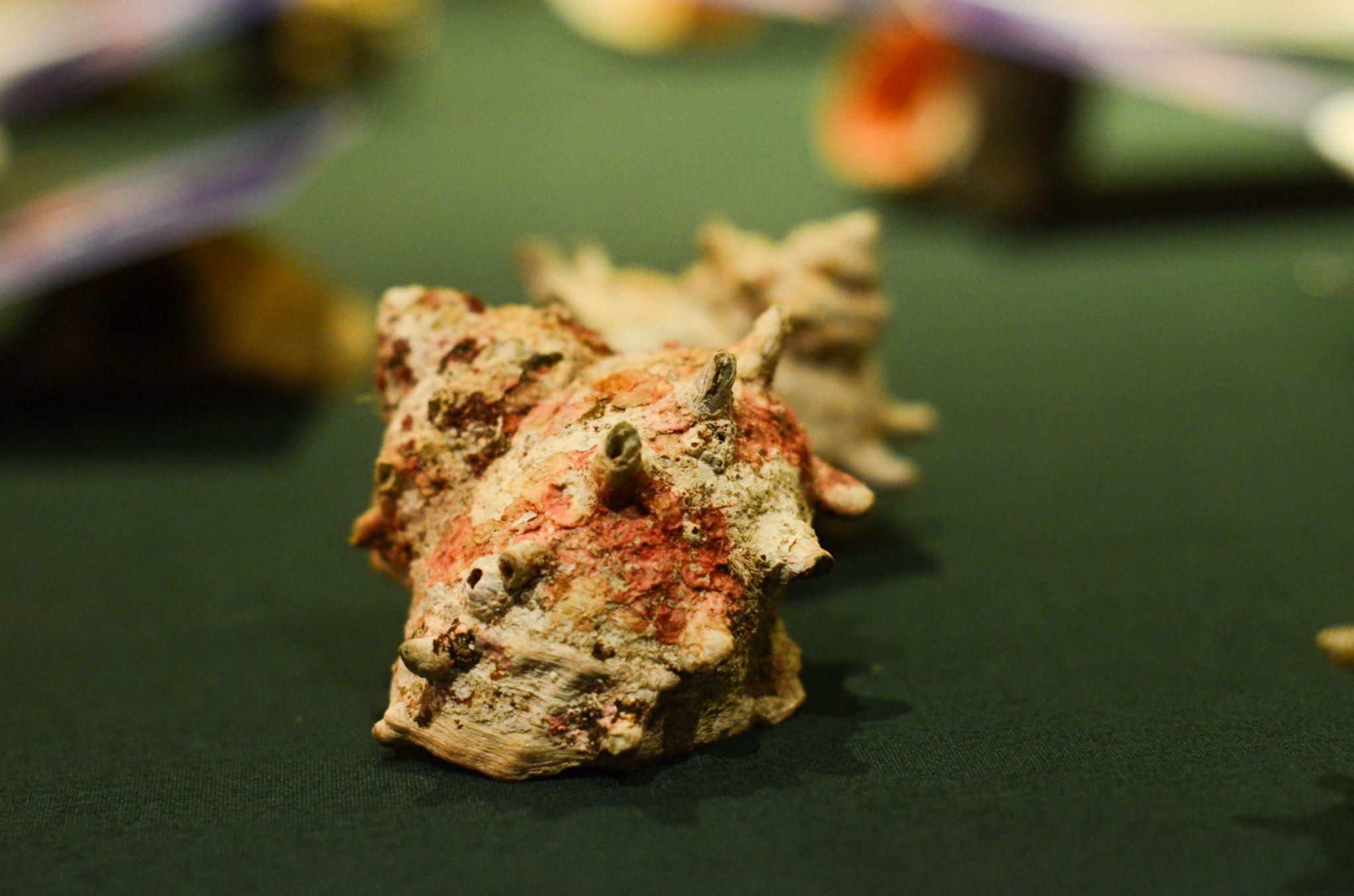
Maizuru Fishing Port, a symbol of Wakasa Bay's rich fishing grounds
A little background on Maizuru Fishing Port helps place the evening in context.
Maizuru is a Category 3 fishing port managed by Kyoto Prefecture. It is an important regional collection point, handling more than 60 percent of the prefecture's seafood by volume, according to the original article.
The history of Maizuru's sea has long been intertwined with the abundant fishing grounds of Wakasa Bay.
Since the Meiji period, the development of an important commercial port and naval base brought urban infrastructure, while Maizuru also grew as a center for coastal fishing and trade across the Sea of Japan. The main fishing methods practiced offshore and around Wakasa Bay have distinct characteristics.
Set-net fishing: Fixed nets are placed along the coast to catch fish that naturally swim into them. This accounts for a particularly large share of landings in Kyoto Prefecture, including Spanish mackerel, horse mackerel, yellowtail, sardines and flying fish through the year. Because the fish are not actively chased, the method can minimize stress and damage, helping preserve freshness.
Boat bottom trawling: Fishing takes place mainly in waters about 100–300 meters deep off Kyoto Prefecture from September through May. Snow crab (Matsuba crab), flatfish, sandfish and deepwater smelt are among the winter catches. Gillnets, longlines, line fishing and shellfish or seaweed harvesting: Around rocky shores and other areas, these methods bring in sea bream, sea bass, cutlassfish and squid, alongside farmed Pacific oysters and Tango cockles.
Seafood landed at Maizuru is distributed through the local fish market and the Kyoto Prefectural Federation of Fisheries Cooperatives to Kyoto's central wholesale market and other urban centers, bringing fresh catches to tables far beyond the port.
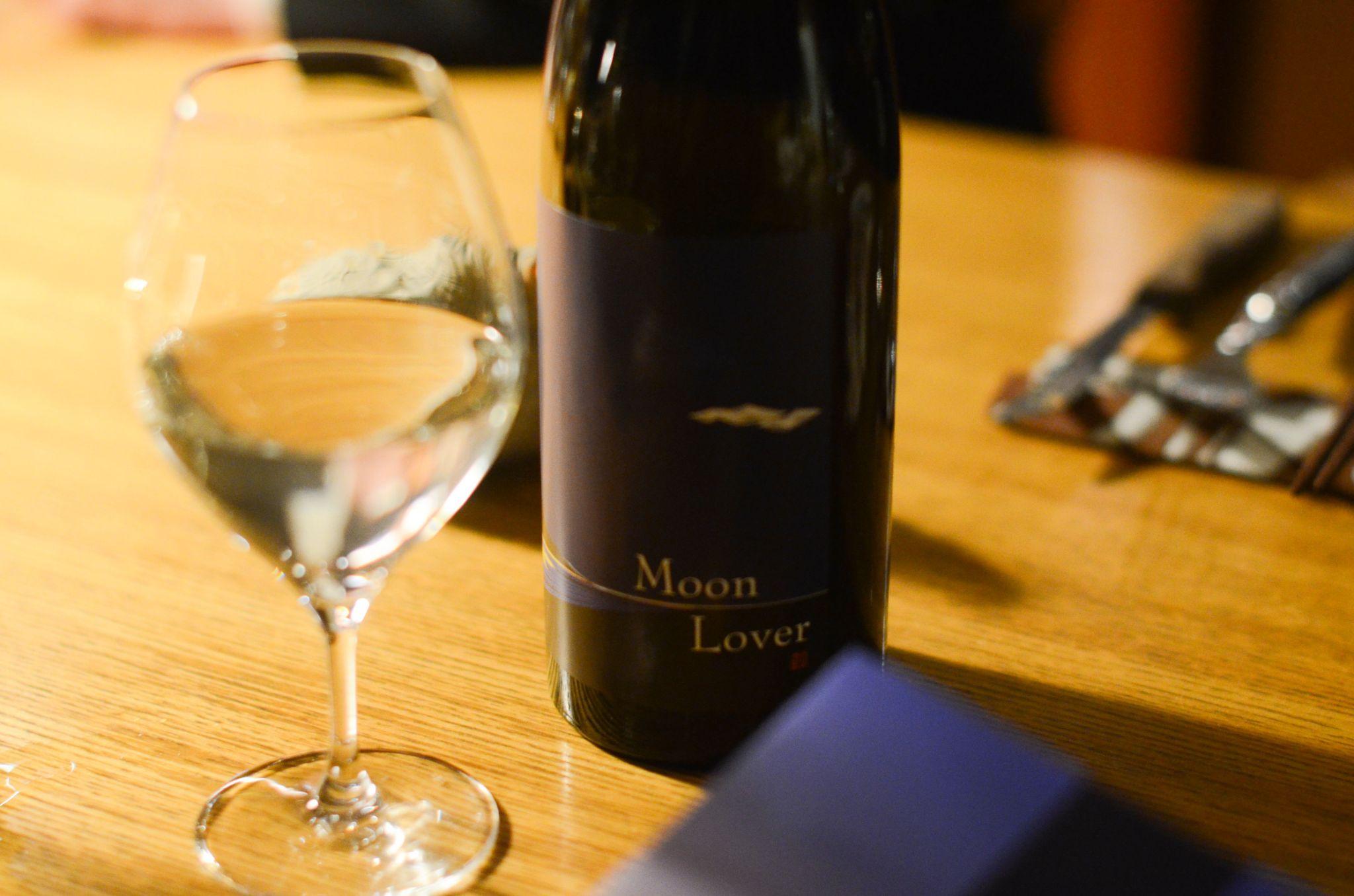
What does it mean when producers and diners share one table?
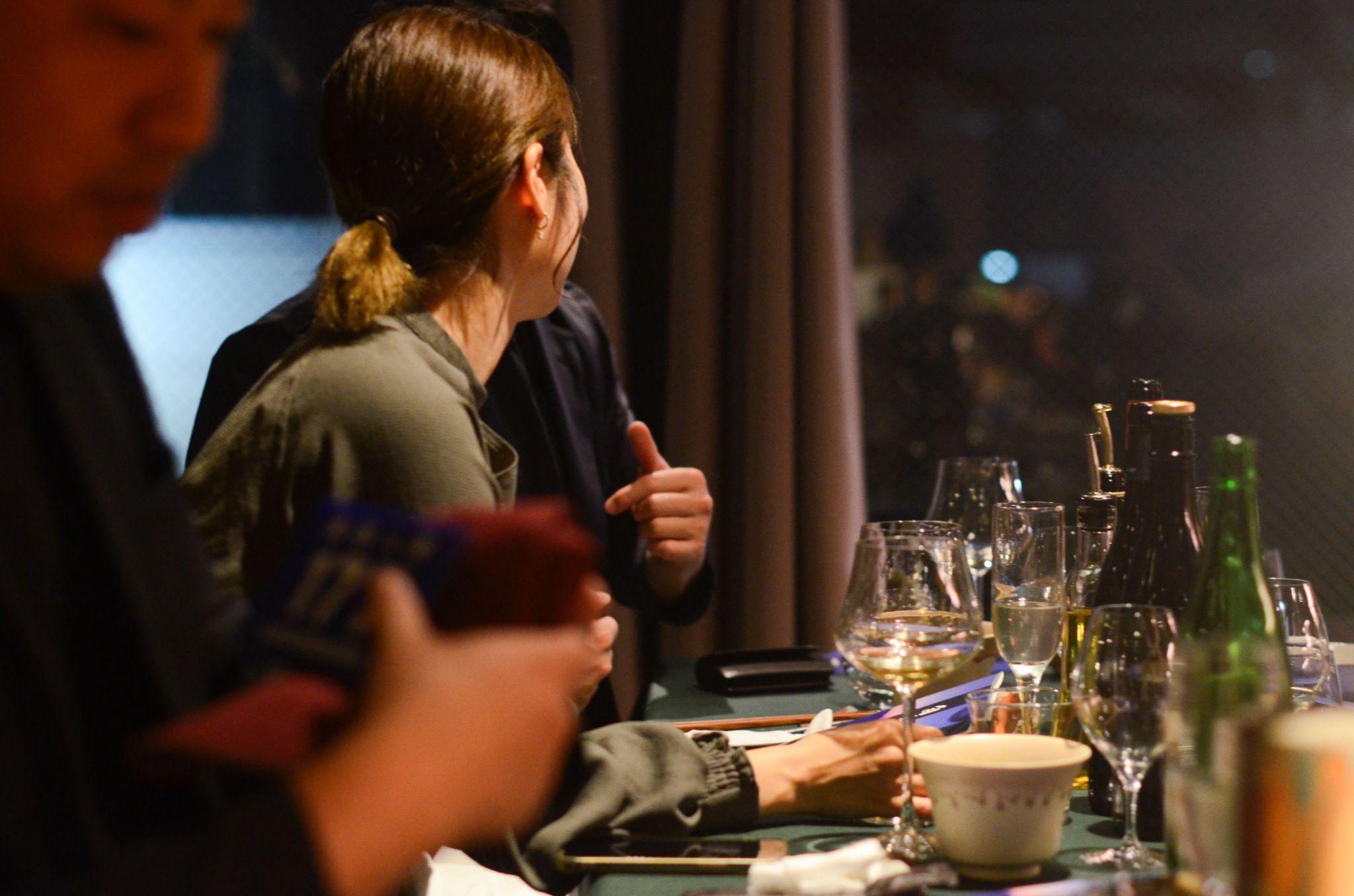
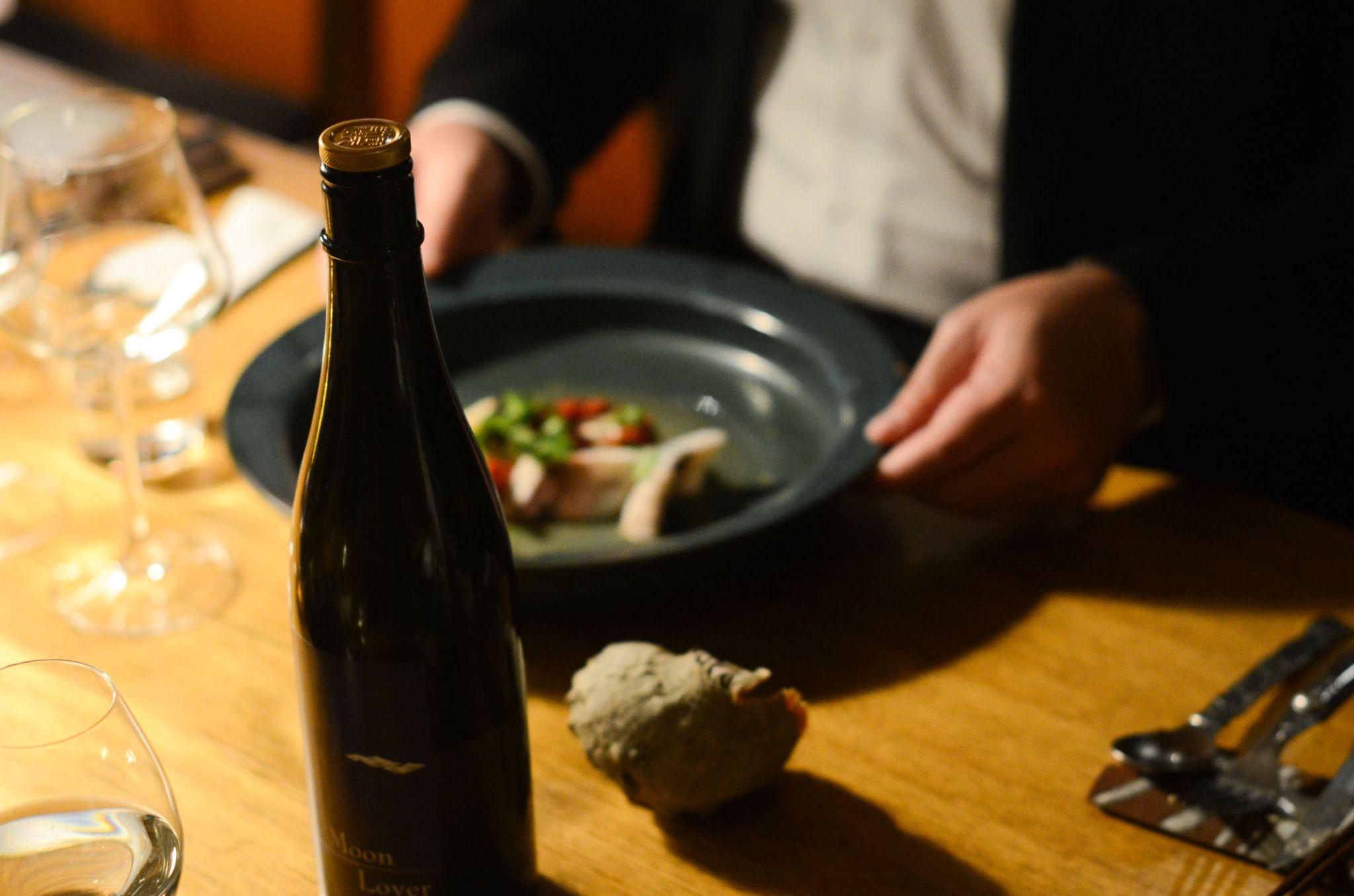
As the gathering drew toward its close, Kambayashi, the other people involved in production, the chefs and all the guests came together around the table for a warm, open conversation.
In the city, the food we eat generally arrives as a finished “plate.” But when a producer sits alongside us and talks about the moment of landing a fish, the energy of the market, the fishermen's work and the care taken to protect freshness in distribution, a dish becomes a living thing with a story.
Guests spoke of hearing how local people bring buckets to the fish market to buy fresh fish for that evening's dinner, saying it reminded them of what abundance in food really means. Others said that learning about pasta made without water or salt and the workings of set-net fishing had completely changed how they experienced the fish.
“When people who eat fish learn where it comes from and what lies behind it, and then tell someone else, that small cycle becomes a force for protecting local fishing and food culture and bringing new energy to our hometown,” Kambayashi said.
By bringing producers, chefs and guests together to share flavor and stories across their usual boundaries, and to express gratitude for nature's gifts, SHIZEN WO SHOKUSU became more than a dinner: it was a tangible step toward nurturing a richer future for food.
The Maizuru record
Text & Photography: Ichiro Erokumae
Concept: Taku Aoyama / Chefs: Keisuke Sugimoto, Kouzou Imai / Fish wholesaler: Daiki Kambayashi